23 Jun Affordable Steel Water Storage Tanks in South Sudan
Affordable Steel Water Storage Tanks in South Sudan
Abeco Tanks supplies affordable steel water storage tanks to commercial, industrial, agricultural, and municipal buyers across Africa since 1983. Rectangular tanks, circular tanks, elevated tanks, and custom tanks are available for delivery to South Sudan, shipped as flat-pack panels and assembled on site.
What Abeco Tanks offers in South Sudan:
- Galvanised steel construction – corrosion-resistant, 30-year service life
- Tank types: rectangular tanks, circular tanks, elevated tanks, and custom tanks
- Capacities from 5,000 litres to 500,000+ litres
- Modular flat-pack delivery to South Sudan – assembled on site across Juba, Bentiu, Malakal, and Wau
- Suitable for NGO/humanitarian, municipal, agricultural, commercial, and cattle corridor use
- Warranty-backed investment on every tank
Buy High-Quality, Affordable Steel Water Storage Tanks in South Sudan
Abeco Tanks has manufactured steel water storage tanks for buyers across Africa since 1983. In South Sudan, NGO procurement teams, municipal water authorities, and commercial operators source tanks built to perform in a severe infrastructure environment. Above all, every tank leaves the factory with warranty protection and full technical documentation.
Furthermore, Abeco’s galvanised steel construction resists corrosion through South Sudan’s alternating flood and drought cycles. Tanks store drinking water, grey water, and agricultural water – all certified safe and hygienic. As a result, buyers gain a durable storage solution that performs independently of damaged municipal networks and unreliable supply chains.
Why Water Storage Matters in South Sudan

According to UNICEF, 59% of South Sudan’s population lacks access to safe drinking water. Civil conflict since independence in 2011 destroyed much of the country’s water infrastructure, and recovery has been hampered by ongoing instability. Upper Nile, Unity, Jonglei, and the Abyei Administrative Area carry the most severe WASH deficits as of 2026.
In 2025, the South Sudanese government pledged a 13-fold increase in the national water and sanitation budget – yet implementation has remained uneven across states.
Over 1.9 million people were internally displaced as of mid-2025, with displacement sites in Bentiu and Malakal facing critical funding gaps. South Sudan’s 2026 Humanitarian Response Plan was severely underfunded at the time of writing.
For NGO field teams, commercial operators, and local authorities, on-site storage is an operational necessity rather than a contingency measure.
Why Galvanised Steel Water Storage Tanks Are the Smart Choice in South Sudan

South Sudan’s climate swings between severe seasonal flooding – which displaced large numbers of people in 2024 – and prolonged dry season drought that dries up farmland and drives water prices sharply higher.
These alternating extremes degrade inferior storage materials rapidly. Galvanised steel with its zinc coating resists corrosion across both flood and heat exposure across a 30-year service life.
Beyond that, Abeco’s modular construction allows tanks to ship as flat-pack panels into Juba via road freight from Mombasa or Kampala – then be assembled on site without specialist equipment. Capacities reaching 500,000 litres far exceed plastic alternatives.
Every tank carries warranty documentation and meets hygienic standards for potable water storage.
Tank Types
| Tank Type | Capacity Range | Typical Applications | Why it suits South Sudan |
|---|---|---|---|
| Rectangular tanks | 5,000-500,000+ L | NGO camp supply, commercial, municipal backup | High volume for urban and displacement site needs |
| Circular tanks | 5,000-250,000 L | Cattle corridor watering, rural community supply | Stable, low-profile for remote pastoral terrain |
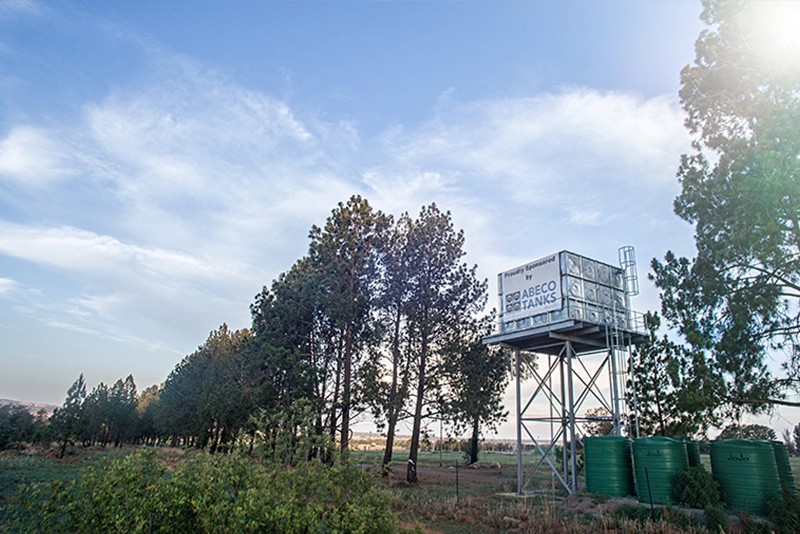
| Elevated tanks | 5,000-100,000 L | Gravity-fed NGO and community distribution | Gravity flow - no electrical pump required |
| Custom tanks | Any size | Bespoke WASH systems, borehole integration | Any dimension for non-standard site requirements |
Choosing Fixed Steel Water Storage Tanks in South Sudan

Fixed galvanised steel tanks deliver the long-term reliability that South Sudan’s humanitarian and commercial sectors both require. A 30-year service life means NGOs, municipal authorities, and commercial buyers invest once rather than replacing short-life plastic tanks repeatedly in a challenging logistics environment.
Rectangular tanks suit large-volume storage at displacement sites in Bentiu and Malakal where population concentrations are highest.
Circular tanks serve agricultural communities and cattle corridor sites across Greater Equatoria and Jonglei – compact, robust, and compatible with solar-powered borehole pumps.
Elevated tanks provide gravity-fed distribution without electrical dependency – a critical advantage where grid access is absent across most of South Sudan’s states.
All tanks are certified safe for drinking water and grey water applications.
Why Use Abeco Water Storage Tanks in South Sudan?
- Design Versatility – Abeco produces rectangular, circular, elevated, and custom tank configurations. Each design suits a different operational context – from Juba commercial sites to remote cattle corridor communities in Jonglei.
- Transportation – Tanks ship from South Africa as flat-pack modular panels. Ground freight via the Kampala-Juba corridor and the Mombasa-Juba road connect to key delivery points across South Sudan.
- Size Versatility – Capacities run from 5,000 litres to 500,000+ litres. Custom tanks are available for any site requirement across South Sudan’s diverse and demanding operational environments.
- Warranty Protection – Every Abeco tank carries manufacturer warranty documentation. This gives NGO procurement officers and government buyers contractual assurance on every project investment.
Sector Comparison
| Sector | Water Storage Need | Tank Recommendation |
|---|---|---|
| Agriculture | Dry season crop and market garden irrigation | Circular or rectangular tanks |
| Commercial/Industrial | Process water, construction, Juba urban development | Large rectangular tanks |
| Residential | Community backup, urban household supply | Smaller rectangular or circular tanks |
| Municipal/Government | Urban backup, district water authority supply | Circular or large rectangular tanks |
| NGO/Humanitarian | Displacement camp supply, emergency WASH response | Elevated or large rectangular tanks |
What Sizes of Steel Water Storage Tanks Are Available in South Sudan?

Abeco tanks are available from 5,000 litres to 500,000 litres and beyond. A 50,000-litre tank suits a rural borehole station serving a cattle corridor community in Jonglei or Greater Equatoria. A 250,000-litre installation suits a displacement site distribution hub in Bentiu or a commercial facility serving Juba’s expanding urban population. On-site modular assembly means any required volume is achievable regardless of transport constraints into remote areas.
Buyer Considerations
| Consideration | What to Know |
|---|---|
| Tank material | Galvanised steel - zinc-coated, corrosion-resistant, 30-year lifespan |
| Capacity range | 5,000 litres to 500,000+ litres - scalable to camp, municipal, or commercial volumes |
| Installation | On-site modular assembly, concrete base required |
| Delivery | Ships from South Africa as flat-pack panels via the Kampala-Juba or Mombasa-Juba corridor |
| Remote access | Panels sized for ground freight into Upper Nile, Unity, Jonglei, and remote rural states |
| Applications | NGO/humanitarian, cattle watering, municipal, commercial, agricultural |
| Drinking water safe | Galvanised steel certified for potable water storage |
Where Are Steel Water Storage Tanks Used in South Sudan?

Humanitarian WASH operations generate the largest demand for water storage capacity in South Sudan. NGO teams operating at displacement sites in Bentiu, Malakal, and Wau require high-volume tanks that can be rapidly assembled without specialist equipment.
Large rectangular tanks serve these sites – delivering the storage volume needed for daily distribution to thousands of displaced people.
Agriculture is the second major sector. More than 70% of South Sudan’s population depends on farming for their livelihood, yet seasonal drought and flooding disrupt irrigation throughout the Nile basin states. Circular tanks serve agricultural communities across Greater Equatoria – providing reliable dry season water for food crops and livestock. In addition, Juba’s growing commercial and construction sector requires process water storage independent of the municipal network.
Benefits of Abeco Galvanised Steel Tanks for South Sudan
| Benefit | What It Means for Buyers in South Sudan |
|---|---|
| Galvanised steel construction | Withstands alternating flood and drought cycles across South Sudan's Nile basin states |
| Modular design | Flat-pack panels reach Bentiu, Malakal, and remote rural sites via ground freight |
| Custom sizing | Volumes from 5,000 to 500,000+ litres match camp, borehole, and commercial needs |
| Long service life | 30-year lifespan reduces replacement burden in a high-cost logistics environment |
| Warranty protection | Contractual assurance for NGO procurement officers and government buyers |
| Hygienic storage | Certified safe for drinking water and agricultural irrigation storage |
How Are Steel Water Storage Tanks Delivered and Installed in South Sudan?

Once manufactured in South Africa, every unit ships as flat-pack modular panels. From there, panels move via sea freight to Mombasa, then by ground through Kampala along the Juba corridor – or directly via the Mombasa-Juba road for eastern delivery points.
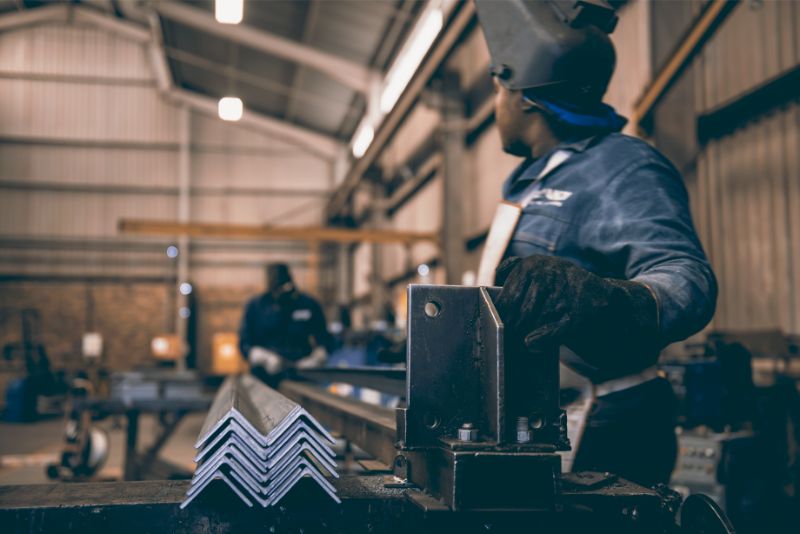
On arrival, local teams assemble tanks on site using Abeco’s installation guidelines – no specialised crane equipment is required. Installation requires a prepared concrete base before assembly begins. Throughout the tank’s service life, after-sales support remains available from Abeco’s Bedfordview facility.
Speak to an Abeco Tanks specialist about the right tank size for your project in South Sudan.
CONTACT US
For more information contact us on:
+27 11 616 7999
Abeco Tanks (Pty) Ltd, 6A Bradford Road, Bedfordview, 2007
Enquiries / Quotes – Rhys Dayson [email protected]
Sales – Mannie Ramos Jnr [email protected]
Frequently Asked Questions
Where can I buy affordable steel water storage tanks in South Sudan?
Abeco Tanks supplies galvanised steel water tanks to South Sudan from its Bedfordview manufacturing facility in South Africa. Tanks ship via the Kampala-Juba corridor and Mombasa road freight to key delivery points. Sizing, delivery, and installation support are available on request. Contact Abeco Tanks to request a quote for your South Sudan project.
What size water storage tank does an NGO WASH operation in South Sudan need?
Site population and daily distribution targets determine volume requirements. A displacement site serving 5,000 people typically needs 100,000 to 250,000 litres of daily storage capacity. Smaller borehole-fed rural installations commonly use 20,000 to 50,000-litre tanks. On-site modular assembly means volume scales to the exact operational requirement.
Are galvanised steel tanks safe for drinking water storage in South Sudan?
Galvanised steel is certified safe for potable water storage. The zinc coating does not leach harmful compounds into stored water under normal conditions. Steel tanks are widely used for municipal, humanitarian, and community drinking water storage across Africa’s conflict-affected and flood-prone regions.
How long do galvanised steel water tanks last in South Sudan’s climate?
Galvanised steel water tanks deliver a 30-year service life through alternating flood and drought conditions. The zinc coating resists corrosion from standing water, heat cycling, and seasonal humidity. Basic maintenance and periodic inspection extend performance across the full lifespan without major intervention.
How are Abeco steel water tanks delivered to remote sites in South Sudan?
Abeco ships tanks as flat-pack modular panels from South Africa by sea freight to Mombasa. Ground logistics carry panels via Kampala to Juba and onward to Upper Nile, Unity, and Jonglei delivery points. On-site assembly requires only basic tools and a prepared concrete base – no crane equipment is needed.
Table of Contents